



Sustainable fast fashion? For many it’s a paradox, but in the recent years, with a fashion world increasingly sensitive to sustainability issues, the Spanish company Mango has set the first, true green revolution.

The fast fashion has revolutionized the industry: on the one hand, it has made it democratic and accessible, on the other hand, it has fueled a consumer race and has created the “society of waste” losing sight of the environmental emergency that seems to have inexorably condemned our planet.
According to the most recent figure, clothing was considered responsible for at least the 10% of the planet’s pollution, positioning itself as the second ‘most toxic’ sector after oil. And it isn’t a coincidence, because about the 35% of the microplastics that populate the oceans and contribute to creating the namely ‘floating islands’, are attributable to synthetic fibers deriving from an oil product called virgin naphtha.

To sum up, the apocalyptic situation caused by the fashion industry, which is difficult to summarize in a few lines, is well known. It also hurts to think that many brands have raised the issue of sustainability only after years of unbridled consumption.
But, how did this growing interest in ecology has been developing?
Firstly, Many companies, especially the luxury ones, have opted for sustainable initiatives but very gradually, diluting every little step forward over the time. Others, on the other hand, immediately threw themselves headlong into the ‘green’ enterprise, but without great conviction. Many of their proposals, in fact, turned out to be just clever “greenwashing” tactics through the promotion of ‘sustainable’, but occasional capsule collections.
Precisely for this reason we speak of incompatibility between the environment and fashion, because frequently the attention to the climate emergency is superficial and skeptical, especially on the part of the big names in fast fashion, since few have really begun to review the different segments that make up the development of a product, from raw material to transport.
But now you are wondering: “Is there anyone in fast fashion who has approached the issues of sustainability ‘sincerely’?”. Yes, I think so, otherwise I wouldn’t have used the term “revolution”, and the most significant case is the company Mango.
Mango is the only one to have raised the bar of sustainability by setting itself the goal of becoming 100% green in 2022: a goal that has already proved achievable and which amazes, since the company, based in Barcelona, was considered among the most polluting until 2015.

This is the process of its green evolution:
- In 2015 Second Chances was born, the project for the collection of clothing and shoes used in different parts of Europe, which led to a collection of 10 tons in 2018.
- In 2016 the company presented “Take Action”, the new business model in line with sustainability criteria and processes with a lower environmental impact. The project is supported by the launch of “We Are Committed”, the collection that incorporates new eco-friendly Mango garments every year.
- Between 2017 and 2018 the number of garments made in a sustainable way doubled, with particular attention to the reduction of microplastics, artificial dyes and mohair wool, which according to PETA involves cruel techniques to obtain it from animals. Fibers also become sustainable. Introduced: recycled wool, viscose, modal, lyocell. The company increases its production year by year, setting itself another ambitious goal: to reach 50% cotton of sustainable origin in 2022.
- Mango therefore participates in the Better Cotton Initiative, to strengthen its commitment to increasing organic cotton within the collections, with particular attention to the three pillars of sustainability: environment, human rights and the economic factor.
- In 2019 Mango signs the ‘Fashion Pact’ with 23 other companies, that is the agreement that aims to minimize the environmental impact of the textile industry by focusing on climate, biodiversity and the protection of the oceans. In the same year, the company claims to have produced 18 million garments with sustainable characteristics, double the previous year, and also plans to increase the use of recycled polyester in its garments by up to 50% by 2015.
- The focus on fibers leads the company to another innovative project in 2020: to increase the share of sustainable fibers in the collections to 100% by 2025. During the same year, Mango joins the Sustainable Apparel Coalition which aims to to promote good practices in the supply chain and measure the environmental and social impact of brands, with the increasingly targeted aim of transforming the brand into a ‘sustainable’ fashion house.
- Since 2020, the company has eliminated approximately 160 million polybags, the plastic bags used for packaging garments, replaced with tissue paper made with natural cellulose pulp from renewable sources.
- Recently, the company announces that 79% of Mango’s items are part of the Committed collection and the company expects to reach 100% by 2022, with items made from 100% sustainable cotton and 50% recycled polyester by 2022. 2025. By 2030 Mango expects to have 100% biodegradable fiber. In addition, he claims to have donated 385,000 garments and accessories to be reused or recycled, with the commitment to give a second life to textile waste from the company’s stocks. Toni Ruiz, CEO of the company, says: “We are determined to continue working towards becoming an increasingly sustainable company. This is why we are making great strides in very ambitious projects that will allow us to minimize our impact and achieve the high sustainability goals that we have set for ourselves “.
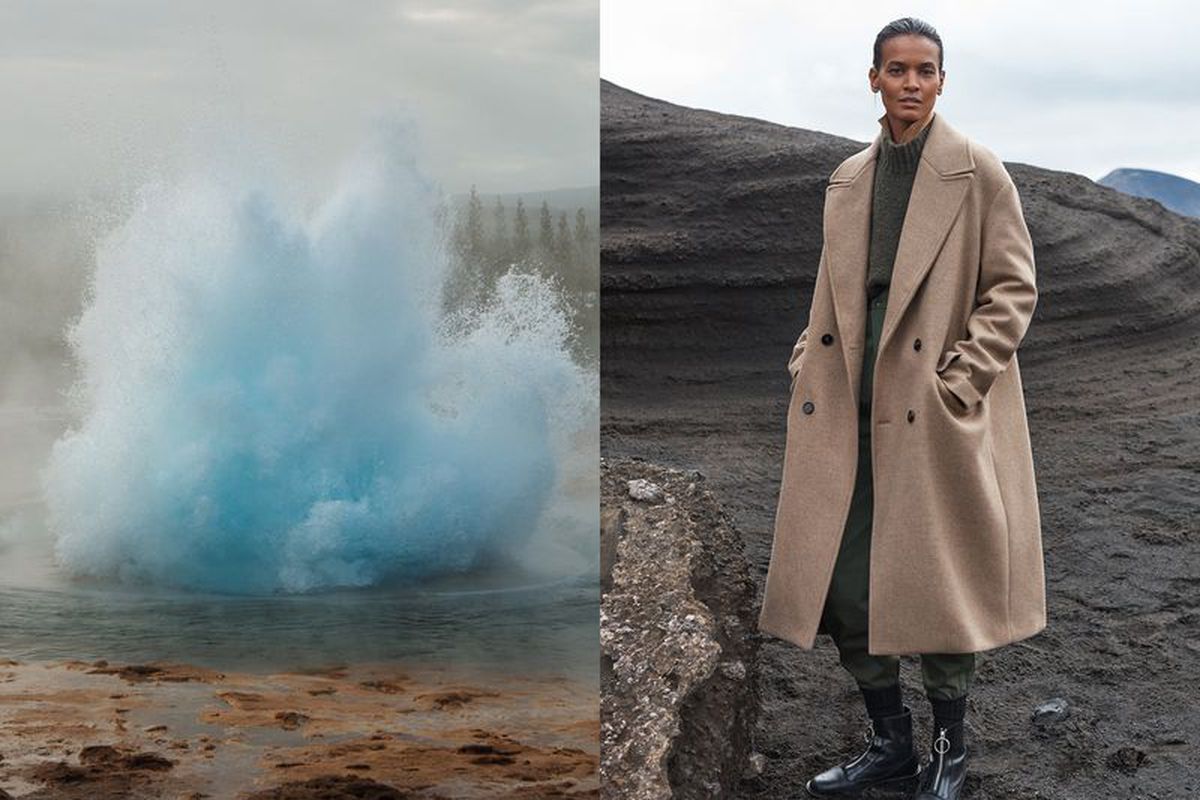
We are aware about the willingness of the big luxury brands to adopt an increasingly ethical behavior, because the initiatives are evident. But the real revolution must take place in fashion giants like Mango, those bought by millions of people, to ensure that the impacting fashion situation can see really concrete results in the short term.

More from Brands & Designers

Loro Piana accused of not paying its indigenous workers in Peru

"Our excellence": this is the value proposition found on Loro Piana's official website under the "viçuna" section. And indeed, how could …

A COLD WALL X Converse

A COLD WALL is a recently born British brand founded in 2005 by the very young designer Samuel Ross. Samuel …

Heaven: Marc Jacobs’ youth collection for fall/winter 2021

On the occasion of the world day for mental health, Marc Jacobs launched the Heaven collection, in honor of young …


